Research
The Vaccari lab investigates how membrane trafficking, signaling, and cellular quality control pathways shape tissue organization, enact tissue homeostasis and prevent disease. We are particularly interested in how defects of glycosylation or in the operation of the endolysosomal and autophagy pathway (ALP) rewire signaling networks in health and disease.
Our research combines in vivo genetics, quantitative cell biology, and disease modeling, leveraging the power of the fruit fly Drosophila melanogaster – a premier model for genetic and organismal studies – complemented by mammalian cell systems and vertebrate models to bridge mechanistic insight and biomedical relevance.
Integrating data across scales: from organelles to tissue to organism
Computational and structural data nowadays are revolutionizing prediction of gene/protein function based on homology and expression data. A vacuolar ATPase subunit is correctly assigned to be part of a molecular engine pumping protons across the lysosomal membrane.
However, what is the subunit impact in the context of organelle physiology? And how does this benefit the cell and tissue and organism that contains it? Finally, what happens when the information encoding the subunit is corrupted in disease?
A unifying goal of the lab is to understand how subcellular processes scale up to control tissue organization and organismal physiology. By combining cell biology with in vivo genetics, we connect:
Organelle dynamics → signaling output → tissue architecture → disease phenotypes
This integrative approach, based on careful gene function studies conducted by our lab, allows us to uncover principles that are both mechanistically precise and contribute to expand our knowledge of the inner working of the life of metazoans.
In the image: Da Vinci’s image of a water pump, mechanistically akin to a vacuolar ATPase complex.


Our approach: Across all research lines, the lab employs a highly integrated toolkit that includes classical genetics, CRISPR- based genome editing, transgenesis, mosaics and misexpression technologies, forward and reverse genetic screens to inactivate (uncharacterized) genes.
Our cell biology investigations relies on high-resolution microscopy, live imaging, organelle dynamics, while our biochemistry toolbox includes protein interactions, membrane fusion, signaling assays to study their function in context.
We exploit the evolutionary conservation of trafficking and signaling pathways to translate discoveries from simple invertebrate systems into conceptual and biomedical advances relevant to humans.
In the image: Two fly egg chambers, the top one showing localization of the posterior pole determinant Par-1 (green) relative to the anterior pole protein Bic-D (red). The bottom one shows polarization of the microtubule cytoskeleton towards the oocyte in the germline syncitium (Vaccari and Ephrussi 2001).
Membrane trafficking and control of signaling
How does intracellular trafficking regulate the activity, spatial distribution, and output of signaling pathways?

A major focus of the lab is the understanding of how signaling, particularly the Notch and Dpp/BMP pathway, is regulated by membrane trafficking. We demonstrated that activation of the Notch receptor occurs in acidic endosomal compartments and is critically dependent on the V-ATPase, establishing a direct link between organelle physiology and signal transduction. More recently, we have elucidated how Dpp ligands are produced in the ER and how protein quality control sets thresholds for productive signaling.
Our earlier work identified endocytic trafficking as a tumor-suppressive mechanism, showing that defects in ESCRT-mediated receptor sorting lead to ectopic signaling and tissue overgrowth, establishing a paradigm for how altered trafficking drives oncogenesis.
In the image: A fly imaginal disc with cells milocalizing Notch (red) in endosomal compartments. Blue outlines cell boundaries and green identify wild-type cells (Vaccari and Bilder 2009).
Trafficking dysfunction in tumorigenesis
How do alterations in membrane trafficking and organelle function contribute to cancer development?

Our work has established that the endo‑lysosomal system acts as a barrier to tumorigenesis. Disruption of ESCRT complexes or lysosomal function results in aberrant signaling, epithelial disorganization, and uncontrolled proliferation, recapitulating key hallmarks of cancer in vivo.
In the image: fly larvae harboring tumor-like growth caused by loss of function of ESCRT genes (right), compared to control larvae (left). Inset show a magnification of tumorous or normal eye imaginal discs.

We have also recently developed Drosophila models of brain tumors and gliomagenesis, revealing how lysosomal or chromatin dysregulation (in collaboration with Valentina Massa) impacts tumor growth.
In the image: Confocal microscopy image of the Drosophila larval central nervous system. The eight type II neuroblast clusters of each brain lobe, developing neurons and glial cells from stem cells, are shown in green. Prospero, a marker of the ganglion mother cells, is shown in white; Elav, which identifies post-mitotic neurons, is in red. Upon reduction of Stromalin 1 (SA1), a component of the cohesin complex, differentiation of type II clusters is delayed with occasional formation of masses of undifferentiated cells that persist to adulthood. Parp1 inhibition prevents such occurrence and restores correct differentiation (Totaro et al 2025).
Mechanisms of pathogenesis in rare and ultrarare genetic diseases
Can fundamental cell biology illuminate mechanisms of rare diseases and identify therapeutic targets?
We use the fruit fly as “disease avatar” to model rare and ultra‑rare disorders. These include incurable, often pediatric pathologies. They affect few patients and consequently support for modeling with vertebrates is lacking in most of the cases.
Examples of past studies include: CEDNIK cause by lack of SNAP29 during development. Congenital and metabolic syndromes affecting autophagy, lysosomal and glycosylation pathways. Emerging models of intestinal, neuromuscular, and neurodegenerative diseases.
These models enable rapid identification of pathogenic mechanisms and candidate intervention points, often difficult to access in patients.

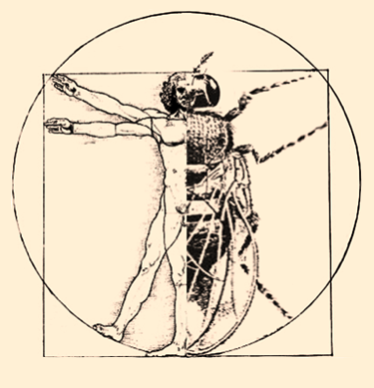
In the image: schematic representation of similarities and difference betwee humans and flies illustration opportunities for discovery (image by Andreas Prokop, Univeristy of Manchester)
Generous support
Research in Thomas’ lab is, or has been, supported by the Italian ministry of research (MUR), Telethon Italia, the European community, AIRC (Associazione Italiana Ricerca sul Cancro), WCR (Worldwide Cancer Research), the University of Milan and Fondazione Cariplo.
